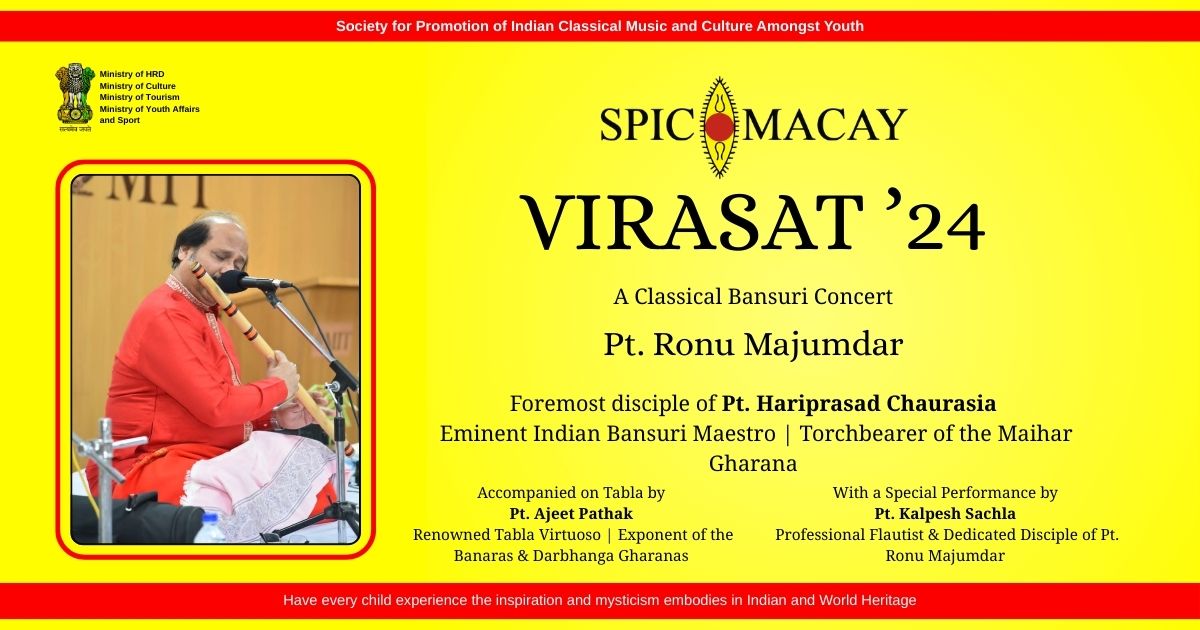
SPIC MACAY Virasat 2024
Bansuri Concert — A Journey of Music, Dignity & Connection
Some experiences transcend the boundary of single events — they unfold as profound journeys. My association with SPIC MACAY’s Virasat 2024 – Bansuri Concert was precisely that: an immersive, grounding experience that continued to resonate long after the final note faded and the applause subsided.
The Context
In February 2024, I had the privilege of serving as a Coordinator and Core Team Member for SPIC MACAY’s Virasat series. In this capacity, I took on the role of Head of Hospitality and Audience Management for a classical instrumental concert series hosted across two contrasting yet equally meaningful settings:
14 February 2024
MIT College of Engineering, Chhatrapati Sambhajinagar — An urban campus performance featuring full stage production, audience management, and an intimate session with our Music Department.
15 February 2024
ZP High School, Sudamwadi (Raghunathpurwadi, Shivoor) — A rural school concert dedicated to bringing India's rich classical heritage directly to village students.
We had the rare honor of hosting maestros who represent the pinnacle of Indian classical music:
Pt. Ranendranath “Ronu” Majumdar
Foremost disciple of Bharat Ratna Pt. Hariprasad Chaurasia; one of India’s most celebrated Bansuri maestros of the Maihar Gharana.
Pt. Ajeet Pathak
Eminent tabla virtuoso and master exponent of the Banaras and Darbhanga gharanas.
Pt. Kalpesh Sachla
Accomplished flautist and dedicated disciple of Pandit Ronu Majumdar.
Being entrusted with their hospitality, well-being, and movement was both an incredible privilege and a responsibility I held with the utmost reverence.
Hospitality Beyond Logistics
My responsibilities commenced early on 14 February when I met the artists at Ahmednagar, accompanying them through every phase of their tour until dropping them off safely at Nashik after their final concert. Over these two intense days, my role extended far beyond transport and accommodation logistics — I was responsible for safeguarding their comfort, managing rigid schedules, ensuring seamless venue transitions, and curating an off-stage environment defined by tranquility and care.
SPIC MACAY imparts a fundamental philosophy: When you host art, you must first host the artist — with unyielding dignity.
The MIT College Concert
The opening concert at MIT College of Engineering executed with flawless precision. From backstage discipline to audience movement, every operational detail functioned seamlessly, creating a serene atmosphere where the music could take center stage.
Following the performance, the artists honored us with a visit to our Music Department. We spent invaluable time engaged in warm conversation, sharing reflections on music and life, and capturing memories I will cherish indefinitely. As I escorted them back to the hotel, I knew the next day would present a completely different landscape.
Sudamwadi: Where Music Met the Village
On 15 February, our journey led us to Sudamwadi — a tranquil village that bestowed a profound, unexpected depth upon the entire initiative. This rural school concert wasn't about stage grandeur or technical scale; it was about pure, unfiltered human connection.
Following their performance, we sat together for a humble lunch in the village, enveloped by nature, genuine warmth, and the heartfelt hospitality of the local residents. The serene environment and grounded spirit of the village served as a powerful reminder of why SPIC MACAY exists: to deliver timeless Indian classical art directly to the hearts of people everywhere.
It reminded me why SPIC MACAY exists in the first place: to take Indian classical art to places where it truly belongs — among the people.
The Closing Moment & Gratitude
Following the Sudamwadi performance, we set out for Nashik. As the tour drew to a close and I dropped the artists at their destination, we shared a quiet, wholesome moment. Collecting their autographs and taking a personal photo together felt less like concluding an assignment as a coordinator, and more like reflecting as a student who had witnessed mastery, humility, and tradition up close.
I extend my deepest gratitude to Shon Patil Sir and Nitin Gaikwad Sir for placing their trust in me and guiding me through this unforgettable journey.
Final Reflection
Respect in Hospitality
Hospitality is far more than operational coordination — it is an active gesture of deep respect for the artist and their craft.
Service-Driven Leadership
Leadership does not always require high visibility; it often thrives in quiet, calm, service-oriented dedication behind the scenes.
Trust & Tradition
Certain responsibilities are defined by trust. Carrying forward a living cultural tradition, even briefly, leaves a lifelong imprint.
I didn’t merely manage an event — I held space for a living tradition. The lessons in humility, discipline, and reverence will stay with me for a lifetime.